

BACK TO ARTICLES
Intelligent TPP

Abstract
— Target Product Profiles (TPPs) are vital for drug development but often suffer from inefficient management. Intelligent TPP leverages AI, automation, and data engineering to streamline workflows, enhance collaboration, and ensure consistency. This unified platform enables agile, data-driven decision-making, giving pharmaceutical teams a competitive edge.Keywords:
GenAI, Target Product Profile, TPP, Benchmark, Competitive Intelligence, Drug Development, Clinical Data Management, Market Access, LLM, AWS.INTRODUCTION
In the rapidly evolving pharmaceutical landscape, competitive intelligence (CI) plays a crucial role in shaping Target Product Profiles (TPPs) by providing real-time insights into market trends, competitor strategies, and evolving benchmarks. TPPs serve as strategic blueprints that define key attributes, success criteria, and development goals for pharmaceutical products, ensuring cross-functional alignment. This is particularly vital in highly competitive therapeutic areas like oncology, where differentiation is critical to market success.
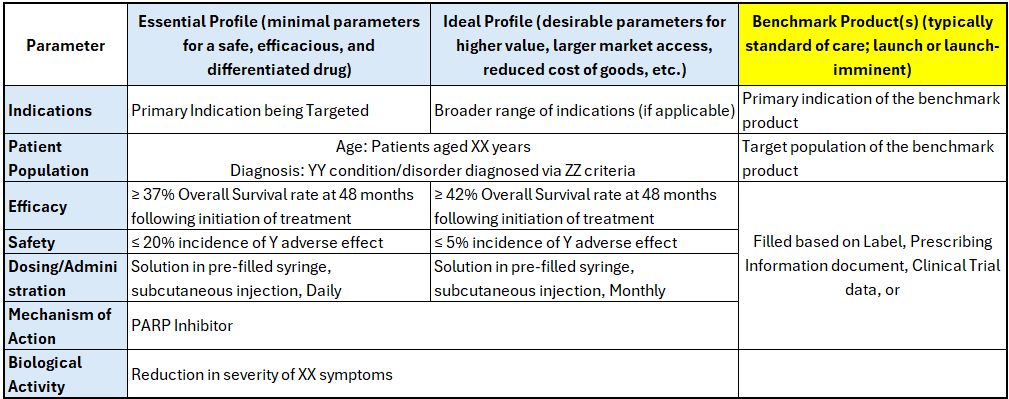
Figure 1: Standard TPP Structure
Benchmarking is central to effective TPP development, as companies must evaluate their product attributes against competitor offerings, standard-of-care treatments, and emerging innovations. Traditionally, this benchmarking process relies on fragmented, manual research—analyzing clinical trial results, regulatory filings, pricing strategies, and key opinion leader (KOL) insights. However, given the rapid pace of scientific advancements and regulatory changes, static benchmarks quickly become outdated, making traditional TPP management inefficient.
Competitive intelligence enables a dynamic benchmarking approach, ensuring TPPs remain aligned with evolving industry standards and market expectations. By continuously analyzing clinical efficacy, safety profiles, patient outcomes, pricing models, and market access conditions, CI allows pharmaceutical companies to refine TPPs in response to real-world shifts. This agility is crucial for identifying competitive gaps, optimizing target product differentiation, and ensuring regulatory and commercial viability.
The advent of Generative AI (GenAI) and advanced analytics has transformed how CI is gathered, analyzed, and applied to TPP development. These technologies automate data extraction, real-time benchmarking, and competitive landscape analysis, enabling companies to stay ahead of market dynamics.
This white paper introduces Intelligent TPP, an innovative solution that integrates competitive intelligence with AI-driven automation to streamline TPP lifecycle management. By leveraging GenAI, data engineering, and MLOps, Intelligent TPP synthesizes diverse data sources—clinical trials, regulatory pathways, commercial intelligence, and competitor insights—to provide dynamic, evidence-based benchmarks for TPP development. Key features include – end-to-end TPP development and management, role-based access controls, automated workflows, and AI-powered data extraction, all designed to enhance collaboration and decision-making.
With Intelligent TPP, pharmaceutical companies can transform TPP management into a proactive, intelligence-driven process, ensuring that their product strategies remain competitive, differentiated, and aligned with market expectations. By establishing a single source of truth, the platform empowers stakeholders to respond swiftly to industry changes, optimize product positioning, and maintain a competitive edge in the life sciences sector.
Problem Statement
The process of developing and managing TPPs has long been fraught with inefficiencies and operational bottlenecks. Despite their critical importance in guiding product development and strategic decision-making, TPPs are often developed manually & managed using fragmented workflows. These outdated methods create challenges that not only slow down operations but also undermine the accuracy and reliability of TPP-related decisions.
Currently, TPP development is highly manual, requiring individuals to sift through vast amounts of literature and internal documents to extract relevant information, structure it into a document, and socialize it with stakeholders for feedback and finalization. This approach is slow, prone to errors, and inefficient, often leading to delays and inconsistencies. Without streamlined workflows or automated tools, collaboration becomes cumbersome, feedback cycles are prolonged, and critical details may be overlooked, making the process sub-optimal and misaligned with the dynamic needs of regulatory and market environments.
One of the most glaring issues is the lack of a centralized platform to manage TPPs, often leaving team members searching for the latest version due to the absence of a single source of truth. This disjointed approach wastes time, causes confusion, and delays critical updates needed to address market or regulatory changes. Additionally, the lack of clear ownership or governance processes makes it difficult to identify who is responsible for maintaining and updating TPPs, leading to accountability challenges and further inefficiencies in collaborative workflows.
Another major challenge is the lack of transparency around the rationale behind changes to TPPs. Teams are often left to guess why certain benchmarks or attributes have been updated, as there is no standardized way to document or communicate the reasons for changes. This lack of traceability hinders trust and alignment among cross-functional teams, making it difficult to form informed decisions or align on future updates.
These inefficiencies are particularly problematic in markets where rapid innovation and dynamic competition demand agility and precision. The inability to quickly locate, understand, and update TPPs results in lost opportunities, delayed decision-making, and an increased risk of misalignment across teams.
The need for a streamlined, intelligent solution is clear. A centralized collaborative platform is essential to address these inefficiencies, ensuring that TPPs are managed with greater transparency, accountability, and agility2. By eliminating the need for manual processes and enabling teams to access a single source of truth, such a solution would not only save time but also empower organizations to make faster, more informed decisions in the highly competitive life sciences landscape.
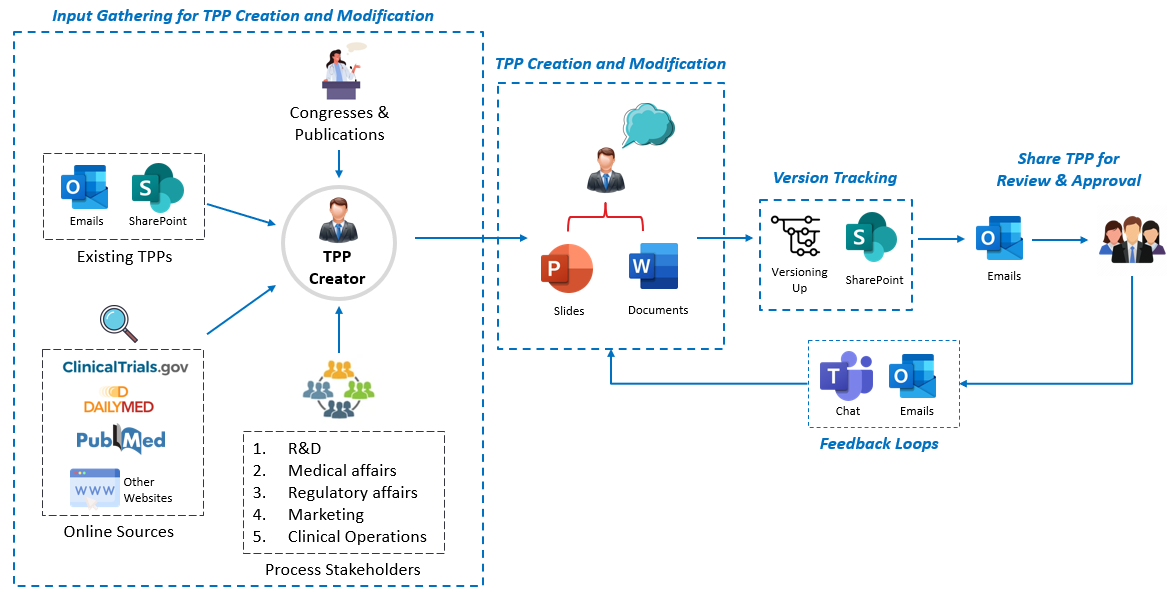
Figure2: Current TPP lifecycle management process is complex & manual.
SOLUTION OVERVIEW
The Intelligent TPP (Target Product Profile) solution is a groundbreaking platform designed to address the inefficiencies in TPP management by leveraging GenAI and automation. It offers a unified, end-to-end lifecycle management system for TPPs, enabling teams to collaborate effectively and make informed, data-driven decisions in a dynamic, fast-paced environment.
Key features of the Intelligent TPP solution include:
·
AI-Driven Data Extraction:
Leverages commercially available AI models to extract TPP information from internal and external data sources such as PubMed, ClinicalTrials.gov, and organizational intelligence (SharePoint, Emails, Literature Repositories, etc.).· Automated Version Control: Ensures a single source of truth for TPPs by automatically managing different versions, reducing manual tracking efforts.
·
Enhanced Collaboration:
Facilitates seamless collaboration among stakeholders through role-based access control, real-time annotations, and streamlined approval workflows.·
Search and Retrieval:
Provides an intuitive, searchable repository of TPPs and Benchmarks, making it easy to locate the latest TPP versions or benchmark data.·
Access and Security:
Ensures robust authentication and access control using SSO and AWS-native security measures. All data remains within the organization as it is securely stored in the organization’s cloud environment.·
Change Tracking and Justification:
Tracks changes to TPPs with detailed annotations, ensuring transparency in decision-making.·
Scalability and Resilience:
A cloud-first application, built on AWS infrastructure - the platform supports a scalable, multi-availability zone deployment to ensure high availability and fault tolerance.By transforming the traditional TPP management process, Intelligent TPP enables pharmaceutical organizations to reduce manual effort, improve collaboration, and maintain a competitive edge.
SOLUTION BLUEPRINT
A. Benchmarks Hub
The Benchmarks Hub in the Intelligent TPP application acts as a centralized repository for creating, managing, and accessing clinical benchmarks and competitive intelligence that form the foundation of Target Product Profiles (TPPs). It allows users to define benchmarks with precision by leveraging multiple dimensions, such as therapeutic area (TA), geography, line of therapy, and clinical trial phase, enabling highly granular insights. The platform integrates seamlessly with diverse data sources—such as public repositories, internal documents, and manual inputs, where information is extracted using web scraping and advanced parsing techniques, processed by GenAI to organize and structure the data as needed, and then presented to the user in a clear, actionable format. This process ensures that benchmarks are both accurate and relevant, providing a strong foundation for strategic decision-making while developing TPPs for a product.
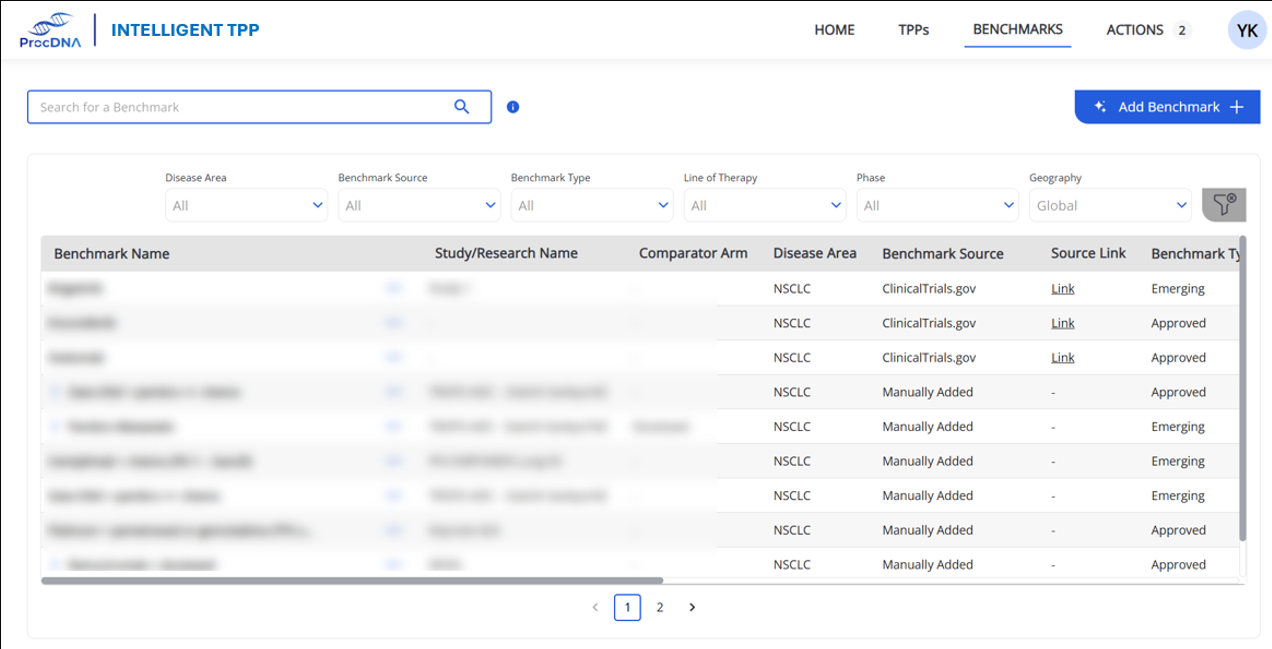
Figure 3: Benchmarks Hub
1. Benchmarks Repository
The homepage of the Benchmarks tab is designed to provide users with a high-level overview of all available benchmarks. The interface includes a search bar and advanced filtering options to enable users to locate specific benchmarks quickly. Filters include criteria such as disease area, benchmark source, benchmark type, line of therapy, geography, and phase, allowing users to refine the displayed data based on their needs.
The benchmark list is displayed in a structured table format, showing key metadata such as the benchmark name, source, study or research name, comparator arm, and status (e.g., approved or emerging). The "Add Benchmark" button is prominently located at the top-right corner of the screen, providing users with quick access to the benchmark creation workflow.
2. Benchmark Creation Workflow
The benchmark creation workflow offers an intuitive, feature-rich process to define and source benchmarks tailored to user needs.
- Customizable Benchmark Details: Users can input critical details such as regimen name, disease area, indication, geography, clinical trial phase, and line of therapy (e.g., first-line or second-line treatment). Mandatory fields ensure essential information is captured before proceeding.
- Flexible Data Source Selection: Users can choose from multiple data sources:- Web: Extract data from public repositories like ClinicalTrials.gov or PubMed.- PDF/SharePoint: Upload files or access SharePoint repositories.- Manual Input: Directly enter data using a built-in form. Clear icons and descriptions simplify the selection process.
- Smart Study Selection: For web-based extractions, users can search and filter studies (e.g., by NCT ID, phase, or results) with metadata like study name, status, interventions, and location. Selected studies can be directly used for data extraction.
- Attribute Customization: Users can review and modify attributes such as target patient population, efficacy, safety, dosing, and healthcare resource use. This ensures that only relevant information is extracted, aligning with specific benchmarking requirements.
The streamlined workflow combines flexibility, precision, and user-friendly design to deliver actionable benchmarks efficiently.
3. Key Features of the Benchmarks HubThe application offers advanced search and filtering capabilities, enabling users to quickly locate benchmarks based on various criteria. It supports multi-source data integration, allowing data extraction from public repositories, internal documents, and manual input, ensuring flexibility across different use cases. Users can define the attributes they wish to extract, making the process highly customizable. Additionally, extracted benchmarks can be linked to TPPs or shared with collaborators for review and validation. The application also features an approval workflow, categorizing benchmarks as "Approved" or "Emerging," with a structured process for promoting emerging benchmarks to approved status.
By offering a comprehensive and flexible benchmark management system, the Benchmarks Hub complements the TPPs tab to provide a seamless, end-to-end solution for managing product development profiles. Its integration with multiple data sources and advanced customization options ensures that users can create high-quality benchmarks that drive informed decision-making.
B. TPPs Tab
IMPLEMENTATION DETAILS
The Intelligent TPP (Target Product Profile) solution is developed as a cutting-edge, cloud-based platform designed to streamline TPP lifecycle management. Built on AWS infrastructure, it employs a three-tier architecture—comprising a presentation layer, application layer, and data layer—that integrates advanced technologies such as Generative AI (GenAI), automated workflows, and robust security measures. This section provides an in-depth technical overview of the implementation, highlighting the intricacies and decisions that shaped the platform’s development.
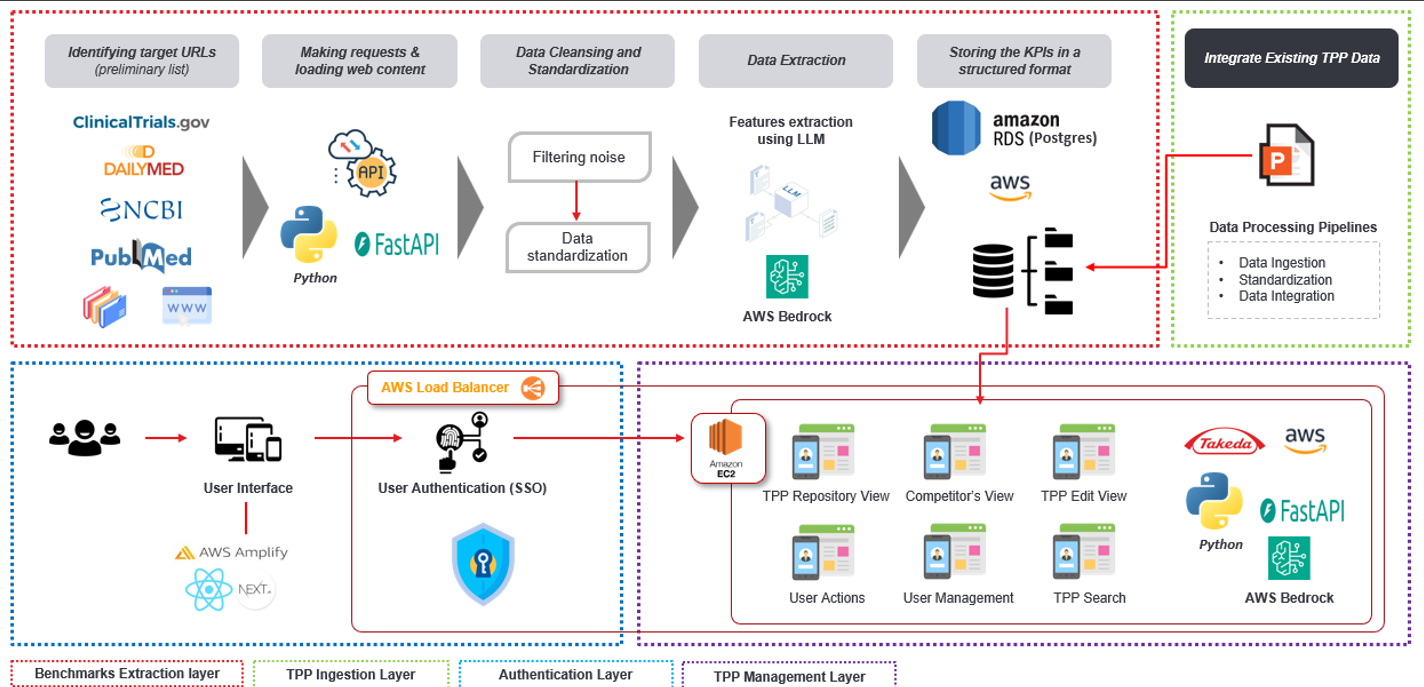
Figure 5: Solution Architecture (High Level)
A. Architecture Overview
The architecture of Intelligent TPP is designed to ensure scalability, reliability, and maintainability. The solution is based on a three-tier model:
1. Presentation Layer (Front-end): The user-facing interface, built with Next.js, is hosted on AWS Amplify. It provides a seamless experience for TPP creation, updates, and management.
2. Application Layer (Backend): This layer, hosted on AWS EC2 instances, handles business logic, API orchestration, and integration with external data sources and AI models.
Data Layer (Database): AWS RDS Postgres stores all structured data, such as TPP attributes, version histories, and user activities, while AWS S3 serves as an archival and logging solution.
B. User Experience
The development of Intelligent TPP prioritized a user-centered design process, incorporating focus groups, expert UI/UX reviews, and iterative testing to refine the interface. Early prototypes were evaluated by UX specialists, ensuring accessibility, intuitive navigation, and seamless workflows. Insights from focus group sessions helped identify usability challenges, guiding improvements in layout, information hierarchy, and interaction design.
Multiple rounds of end-user testing were conducted, gathering real-world feedback to address pain points and enhance overall usability. The process followed an iterative design cycle, where refinements were continuously made based on testing outcomes, ensuring a smooth, efficient, and user-friendly experience for all stakeholders.
C. Front-End
The front-end is hosted using AWS Amplify, which offers a fully managed service for deploying static and server-rendered web applications. Amplify is chosen for its serverless architecture, built-in CI/CD pipeline support, and ability to integrate with GitHub repositories. Each code update triggers an automated build and deployment, ensuring rapid iteration without manual intervention.
Amplify connects with AWS Route 53 for DNS management, providing a custom domain for the application. Secure communication is ensured using AWS Certificate Manager (ACM), which provides SSL/TLS certificates. By using server-side rendering capabilities of Next.js, the front-end provides a fast and interactive user experience. Features include dynamic search functionality, collaborative editing interfaces, and intuitive dashboards for tracking TPP updates.
D. Backend
The backend of the Intelligent TPP platform is implemented on AWS EC2 instances to handle the core logics of TPP lifecycle management. Docker containers are used to package and deploy the application, ensuring consistency across development, testing, and production environments. The backend supports a wide range of functionalities, including API processing, data integration, user authentication, and AI-based data extraction.
1. Compute Resources:The backend application is hosted on EC2 instances within a Virtual Private Cloud (VPC). Each instance operates within a private subnet to ensure restricted access, while an Application Load Balancer (ALB) in a public subnet manages incoming traffic. For production environments, the backend is deployed across multiple Availability Zones (AZs) to ensure fault tolerance. The ALB performs SSL termination, offloading encryption and decryption tasks from the EC2 instances.
2. Auto Scaling and Traffic Management:To handle fluctuating workloads, Auto Scaling Groups (ASG) dynamically adjust the number of EC2 instances based on predefined metrics such as CPU utilization and request volume. This ensures that the system scales up during high-traffic periods and scales down to save costs during low activity periods. The ALB evenly distributes incoming requests across available instances, ensuring optimal performance and preventing bottlenecks.
3. API Gateway and Integration:The backend exposes REST APIs for communication with the front-end and third-party services. APIs handle core operations such as TPP creation, modification, and approval workflows. These endpoints also support data ingestion from external sources like PubMed and ClinicalTrials.gov, which are essential for generating benchmarks and updating TPPs.
E. Data Storage & Management
Data storage is a critical component of the Intelligent TPP platform, ensuring reliability, scalability, and security.
1. Relational DatabaseThe platform uses AWS RDS Postgres for managing structured data. RDS Postgres is selected for its support of JSON data types, which allows flexible storage of TPP attributes and metadata. In production environments, RDS is configured for Multi-AZ deployment to ensure high availability. A primary instance handles read and write operations, while a standby instance in another AZ is synchronized in real-time for failover purposes.
2. Archival and LoggingHistorical data, including logs and version histories, is archived to AWS S3 for long-term retention. S3 offers robust durability and cost optimization through lifecycle policies, which transition data from S3 Standard to lower-cost tiers like S3 Standard-IA after two years. Archived logs are stored in JSON format, allowing easy retrieval and querying when needed.
3. Data Retrieval and ExportUsers can query archived data through the platform’s interface by specifying parameters such as date range or TPP version. Retrieval processes are managed by backend API calls, which generate and store export files in S3. Notifications are sent to users when data exports are completed, enhancing usability.
F. AI Integration
One of the most innovative aspects of the Intelligent TPP platform is its use of Generative AI for data extraction. This capability streamlines the traditionally manual process of identifying and updating TPP attributes.
1. Generative AI ModelsThe platform employs AWS Bedrock to access Claude-3, a state-of-the-art large language model (LLM). While Claude-3 is chosen for its ability to handle vast token limits (up to 2 million) and its high accuracy1 in extracting attributes like safety endpoints and efficacy metrics,
the platform is designed to be LLM-agnostic
, allowing for the integration of other LLMs as needed. Parameterized zero-shot prompting enables the model to identify specific data points from unstructured text, eliminating the need for extensive fine-tuning.2. Data PipelinesData ingestion pipelines integrate with APIs from external sources, including but not limited to PubMed and ClinicalTrials.gov, to fetch relevant medical data. The raw data is cleansed and pre-processed before being passed to the LLM for attribute extraction. Outputs are validated and stored in the RDS database, enabling seamless updates to TPPs.
G. Security & Authentication
Robust security measures ensure the protection of user data and application infrastructure.
1. AuthenticationSSO Management Service of choice handles user authentication, providing a centralized and secure login mechanism. SSO tokens are also used for accessing SharePoint data, which is integrated into the platform for document retrieval and collaboration.
2. Encryption and Key ManagementSensitive information, including database credentials and API keys, is encrypted using AWS Key Management Service (KMS). All data is encrypted at rest and in transit using industry-standard protocols, ensuring compliance with regulatory requirements.
3. Network SecurityThe application employs AWS Web Application Firewall (WAF) to protect against common exploits such as SQL injection and cross-site scripting. Security Groups within the VPC enforce strict inbound and outbound traffic rules, allowing only authorized access.
H. Logging & Monitoring
Comprehensive logging and monitoring capabilities provide visibility into system performance and user activity.
1. LoggingUser interactions, API calls, and system events are logged and stored in AWS S3. Logs are also ingested into AWS CloudWatch, where administrators can set up alerts for anomalies such as high CPU usage or failed API requests.
2. MonitoringCloudWatch monitors the health of backend services, including EC2 instances, ALB, and RDS databases. Metrics such as response times and error rates are visualized on dashboards, enabling proactive issue resolution. A dedicated admin interface allows platform administrators to view logs and track application usage.
I. CI/CD & Deployment Strategy
The Intelligent TPP platform adopts modern DevOps practices to streamline development and deployment.
1. CI/CD PipelineThe front-end CI/CD pipeline is managed by AWS Amplify, which automates the build and deployment process. For the backend, GitHub Actions triggers workflows that include code linting, unit testing, and integration testing. AWS CodeDeploy handles deployment to EC2 instances, ensuring a seamless rollout process.
2. Environment ManagementSeparate environments for development, testing, and production are maintained. The development sandbox uses single-AZ deployments to minimize costs, while the production environment employs multi-AZ architecture for high availability.
3. Rollback MechanismAn automated rollback mechanism ensures that the application reverts to the previous stable version in case of deployment failures, minimizing downtime and impact on users.
J. Disaster Recovery & ResilienceDisaster recovery is integral to the platform’s architecture. Multi-AZ deployments ensure redundancy at both the database and application layers. In the event of a failure, the system automatically switches to standby resources, ensuring continuity. Daily RDS snapshots and archived logs in S3 provide additional layers of data protection.
K. Cost OptimizationCost efficiency is achieved through strategic use of AWS services. The serverless architecture of AWS Amplify and S3 eliminates the need for always-on resources. Auto-scaling ensures resource allocation matches demand, reducing waste during low activity periods. Lifecycle policies for S3 further optimize storage costs, transitioning less frequently accessed data to lower-cost storage classes.
CONCLUSION & FUTURE SCOPE
The Intelligent TPP platform transforms competitive intelligence by enabling continuous market surveillance and strategic insights for pharmaceutical leaders. By integrating Generative AI, automation, and real-time benchmarking, it provides C-suite executives, R&D teams, and commercial strategists with a unified, data-driven approach to TPP lifecycle management. The platform ensures agility and informed decision-making by automating version control, tracking competitor advancements, and streamlining access to benchmark intelligence from sources like PubMed, ClinicalTrials.gov, and internal repositories. With role-based collaboration and AI-powered analytics, pharmaceutical teams can swiftly adapt to regulatory shifts, emerging therapeutic trends, and competitor activities, ensuring a strategic edge in a competitive landscape.
Future developments will focus on real-time competitor tracking, predictive analytics for market shifts, and AI-driven scenario modeling to optimize product positioning. Advanced regulatory compliance automation, blockchain-enabled audit trails, and seamless integration with industry tools like Veeva and Medidata will further strengthen strategic planning and portfolio management. By
empowering C-suite executives with on-demand, actionable insights
, Intelligent TPP redefines how pharmaceutical companies monitor, react, and capitalize on market dynamics, ensuring sustained competitive advantage and innovation in drug development.REFERENCES
Huanbutta K, Burapapadh K, Kraisit P, Sriamornsak P, Ganokratanaa T, Suwanpitak K, Sangnim T. Artificial intelligence-driven pharmaceutical industry: A paradigm shift in drug discovery, formulation development, manufacturing, quality control, and post-market surveillance. Eur J Pharm Sci. 2024 Dec 1;203:106938. doi:10.1016/j.ejps.2024.106938
Read more articles
Partner with us
At the heart of our approach is a commitment to your success. We take time to understand your unique challenges and craft tailored solutions that drive meaningful results. Let's build something extraordinary together.
Connect with us


Capabilities
©2026 ProcDNA Inc. | All Rights Reserved