The Challenge
ProcDNA's Solution

Weekly Patient Signal Capture
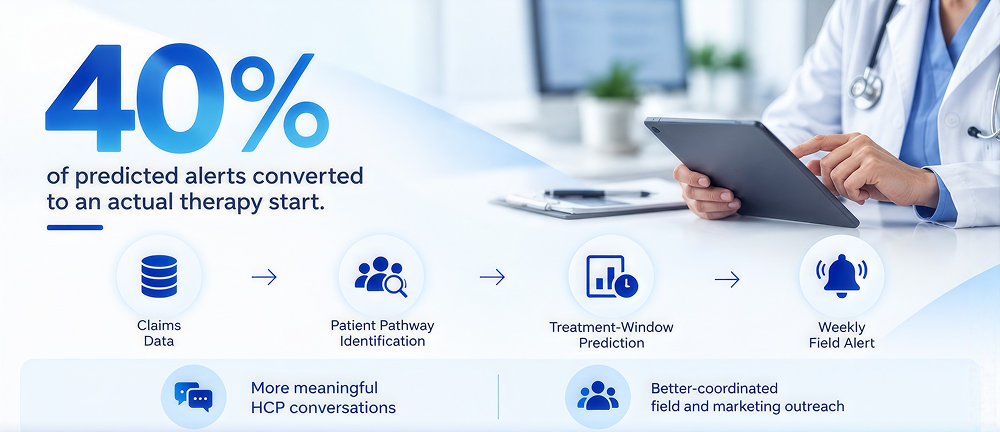
Diagnosis, procedure, and prescription patterns in claims data revealed which patients were newly entering the frontline Hodgkin's Lymphoma treatment pathway, refreshed every week. This gave the team a live view of pathway activity instead of a static, backward-looking report
Treatment-Window Prediction
A predictive model scored those patterns to flag which patients were nearing a treatment decision, and roughly when that decision would happen. Rather than treating every diagnosed patient the same way, the ML model ranked patients by how close they stood to starting therapy.
Field-Ready Alerting
Each prediction reached representatives as a ready-to-act suggestion inside the team's existing field engagement platform, with no new system for reps to learn. Marketing teams received the same signal, so personal and non-personal promotion could point toward the same window at the same time.
Cross-Functional Validation
Commercial and medical affairs teams confirmed which comorbidities and diagnostic tests reliably signaled a genuine frontline case, keeping every alert clinically grounded. This step kept the model anchored to how physicians actually diagnose Hodgkin's Lymphoma, rather than to claims patterns alone.
Impact
Predictions That Turned Into Treatment
Converted 40% of predicted alerts into an actual therapy starts, turning a previously untimed outreach effort into one grounded in patient-level signals.
More Meaningful HCP Conversations
Gave sales representatives the context to have meaningful conversations with HCPs, instead of general check-ins disconnected from where a patient stood in the treatment pathway.
Better-Coordinated Field and Marketing Outreach
Increased coordination between marketing and field teams, improving the success of non-personal promotion delivered during the treatment-decision window.















































Partner with us